Chicago's Department of Housing has granted 1,353 ADU pre-approvals since the pilot began in 2021, according to Chicago Cityscape's running count through October 29, 2026. Over the same period the city issued 466 building permits for new accessory dwelling units. Since the permanent ordinance took effect on April 1, 2026, 537 pre-approvals have been granted and only 36 permits issued, eight of them for coach houses.
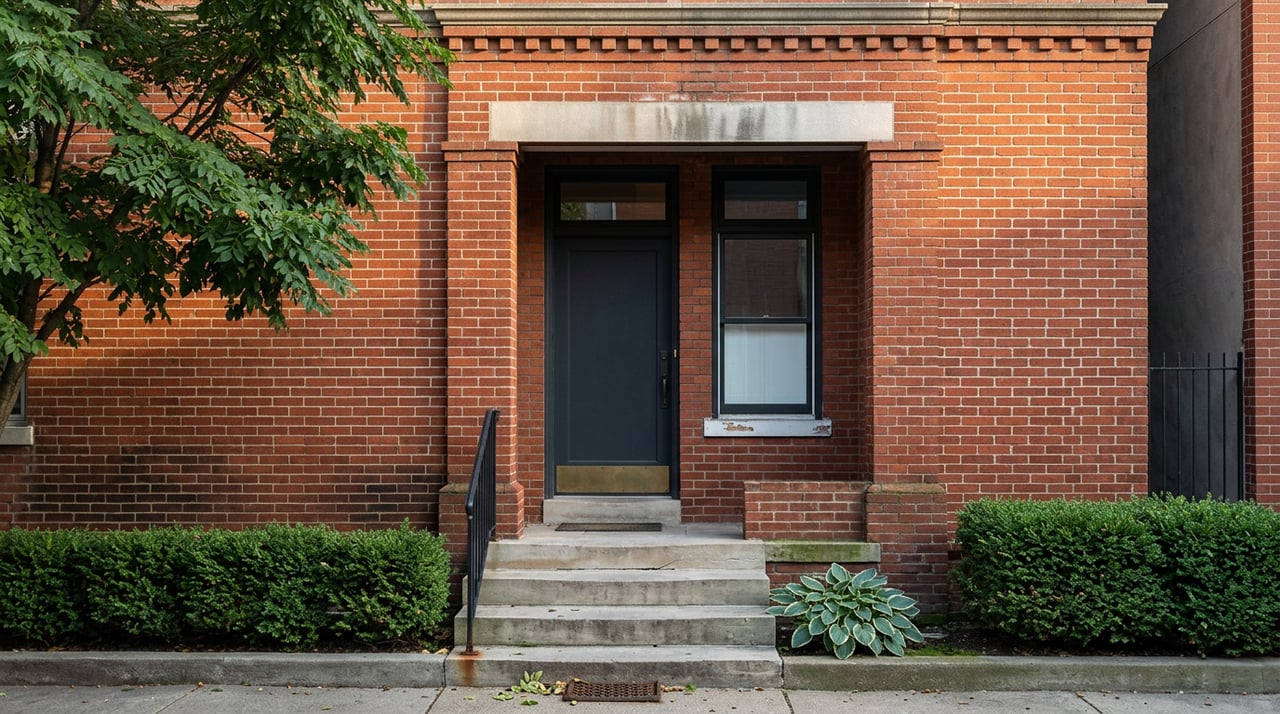
That gap is the most useful number a Chicago buyer can have right now. The city has made it legal to add a coach house or basement unit on hundreds of thousands of lots. If you're looking at a two-flat in Logan Square or a brick single-family house with a deep yard, "ADU potential" is a set of hurdles that has to be cleared in order. Each one filters out properties, and most projects stop somewhere along the way.
Hurdle one: the address, not the ward
The April 2026 launch expanded single-family eligibility to 34 wards. The city counted more than 320,000 eligible parcels, up from about 116,000 under the pilot. It's easy to read "34 wards" as a map you can shade in. It isn't one.
Under the city's requirements page, ADUs are allowed by right in multifamily, mixed-use, and certain business and commercial zoning districts. In single-family RS zoning they're allowed only inside mapped "ADU-Allowed RS Areas" that City Council creates by ordinance. The Chicago Association of REALTORS® puts the by-right districts more plainly: RT, RM, B1 through B3, and C1 through C2. In RS zoning, the local alderman has to opt in before ADUs are allowed at all.
Inside those RS areas, three more conditions can apply to a specific address:
- Annual block caps. Some RS areas limit coach houses and conversion units combined to one pre-certification per block per calendar year in RS-1, two in RS-2, and three in RS-3.
- Owner occupancy. Where it applies and the main building is a detached house, the owner has to live there to get pre-certified. The city asks for a government photo ID plus a document such as a tax bill, utility bill, deed, mortgage statement, or insurance declaration.
- Administrative adjustment. Some areas require one, which comes with a $500 fee and goes through the Department of Planning and Development.
The block cap is the one that matters most in a transaction. On an RS-1 block with a cap, a neighbor who files first can use up the year's only slot. The address is still eligible, but it may not be able to get pre-certified until the next calendar year.
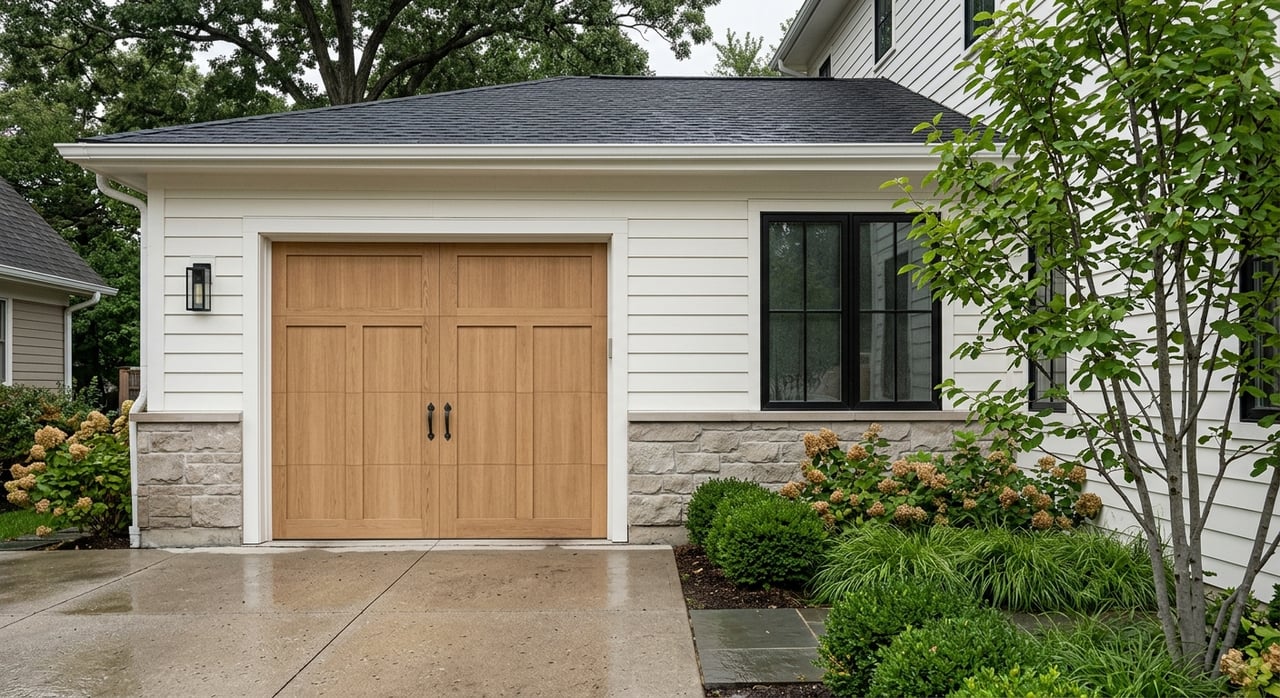
Other rules narrow it further. To add a conversion unit, the main building has to be at least 20 years old. A coach house can be added whatever the main building's age, as long as the main building is built first. A property with one to four existing legal units can add one conversion unit and one coach house. A property adding two or more ADUs has to make half of the new units affordable to households earning no more than 60% of area median income for 30 years, and ADUs can't be used as short-term rentals. The only reliable check for a given address is the city's eligibility lookup.
Hurdle two: the money, which is where most projects stop
Pre-approval is free to pursue. Construction isn't. At a Chicago Association of REALTORS® session recapped in September 2026, a Chicago broker and developer who has completed four ADU projects, with two more under construction, laid out what the work has actually cost him.
| ADU type | Estimated cost, per the association's recap |
|---|---|
| Coach house | $400,000 to $600,000, with one recent project over $700,000 |
| Garden-level conversion | $145,000 to $170,000 total |
| Excavation and foundation | $50,000 to $60,000 |
| New water, sewer and electrical service | $40,000 to $50,000 |
| Interior build-out | $50,000 to $60,000 |
| Attic or top-floor conversion | $80,000 to $100,000 or more |
He said every coach house he described was built to house a family member, not a tenant. The association's recap quotes him directly:
"They're not financially viable as investments. You're not going to make your money back on these coach houses. They're mainly built for related living arrangements."
He also said only about 10% of the properties he evaluates still make financial sense once he plans for higher construction costs, lower rent, and higher vacancy. According to the same recap, buyers often expect an ADU to cost $25,000 or $30,000. He considers that unrealistic for a unit with proper heating, cooling, and water service.
The permit numbers follow the same pattern. Of the 466 new-ADU permits since 2021, 334 were for interior units and 132 for coach houses. When Block Club Chicago covered the April launch, the city's housing commissioner said conversion units are often more cost-effective than coach houses, which "can get pricey."
A second cost applies only to coach houses. The permanent ordinance requires coach-house contractors and subcontractors to take part in registered U.S. Department of Labor apprenticeship programs. Conversion units are exempt.
The best-known subsidy is also unavailable. NHS Chicago's ADU grant pilot offered planning grants up to $10,000 and construction grants up to $75,000, structured as five-year forgivable loans, and it is closed to new applications.
Hurdle three: the process after "approved"
The city's own process explains a lot of the gap. A pre-certification letter doesn't authorize construction. A separate Department of Buildings permit is required first. After pre-certification comes architect or engineer plans, DOB review with possible revisions, construction, and inspections. Chicago Cityscape notes that approved applicants may wait a year or more before they're ready to build.
Physical requirements stop some projects at the design stage. A basement unit needs at least seven feet from finished floor to finished ceiling, or the height has to be increased. That requirement is what drives the excavation line in the cost table.
For timing, the developer in the association's recap tells clients to plan on 9 to 12 months from permit submission to a finished unit, with architectural work on top of that. Even a fully permitted project of his stalled on an unrelated rule. Adding a sixth unit triggered a requirement for a dedicated trash enclosure, and pursuing a variance added roughly $4,000 in legal and architectural fees.
Where the permits are actually landing
The completed permits are concentrated in a few areas. Counting all 485 ADU permits, including 19 that legalized existing units, the 1st Ward leads with 88, followed by the 47th with 75, the 40th with 53, the 35th with 51, and the 48th with 34. By mid-March 2026, Block Club reported that about 85% of the 816 pre-certified units were on the North or Northwest Side.
Interest is real. WTTW reported 126 new applications in the first week after the expanded program launched.
What this changes when you're comparing Chicago homes
Taken together, the hurdles change how much a listing's ADU upside should count in what you pay. Price the home on the units it legally has today. If a coach house or garden unit is part of your plan, treat it as a separate project with its own budget, timeline, and approval risk, and confirm eligibility for the specific address before you write an offer.
Not all research points toward risk. Some of the developer's best opportunities came from properties where nobody had checked the history. He used historical maps, public records requests to the city's water department, and old water records to confirm a building's true unit count. In one case, the records showed a building was legally a four-unit property, though the seller had believed for 35 years that it wasn't. Before you make an offer, ask for the property's records to confirm how many legal units it already has.
Financing changes the math too. For owners staying under four total units, the developer considers renovation loans such as FHA 203(k) the most workable option, and he reported underwriting projects at roughly 7% interest as of the September 2026 recap.
Better data is on the way. A September 25, 2026 amendment to the Municipal Code requires the city to report annually on ADU pre-certifications and building permits, starting March 31, 2027. Until that first report comes out, Chicago Cityscape's count is the closest thing to a scoreboard. The site notes that it identifies ADU permits from each permit's work description, so some projects may be missing.
Quick questions
Does a pre-approval mean I can start building? No. Pre-certification confirms eligibility. A separate Department of Buildings permit is required before any work begins.
Is a basement unit always the cheaper route? It usually costs far less than a coach house, but the developer's estimate for a code-compliant garden unit still runs $145,000 to $170,000. Excavation to meet the seven-foot ceiling requirement and new utility service make up a large share of that.
If a house is in one of the 34 wards, is it eligible? Not necessarily. Single-family lots qualify only inside mapped ADU-Allowed RS Areas, and the city's lookup tool is the place to check a specific address.
This post is general information, not legal, tax, or financial advice. Confirm zoning, eligibility, and financing for your own property with the city and the right licensed professionals.
If you own a Chicago home and want to know how its legal unit count, lot, and zoning show up in today's sale prices, Tim Good Group can walk you through comparable sales and give you a realistic number. Start with What's My Home Worth?, and we'll take it from there with you.